
Dental knowledge
HOW TO PROPERLY AND EFFECTIVELY CLEAN AND CARE FOR BRACES
A guide to properly cleaning and caring for braces with an interdental brush, dental floss, and a water flosser; including notes on diet, follow-up visits, and wearing retainers.
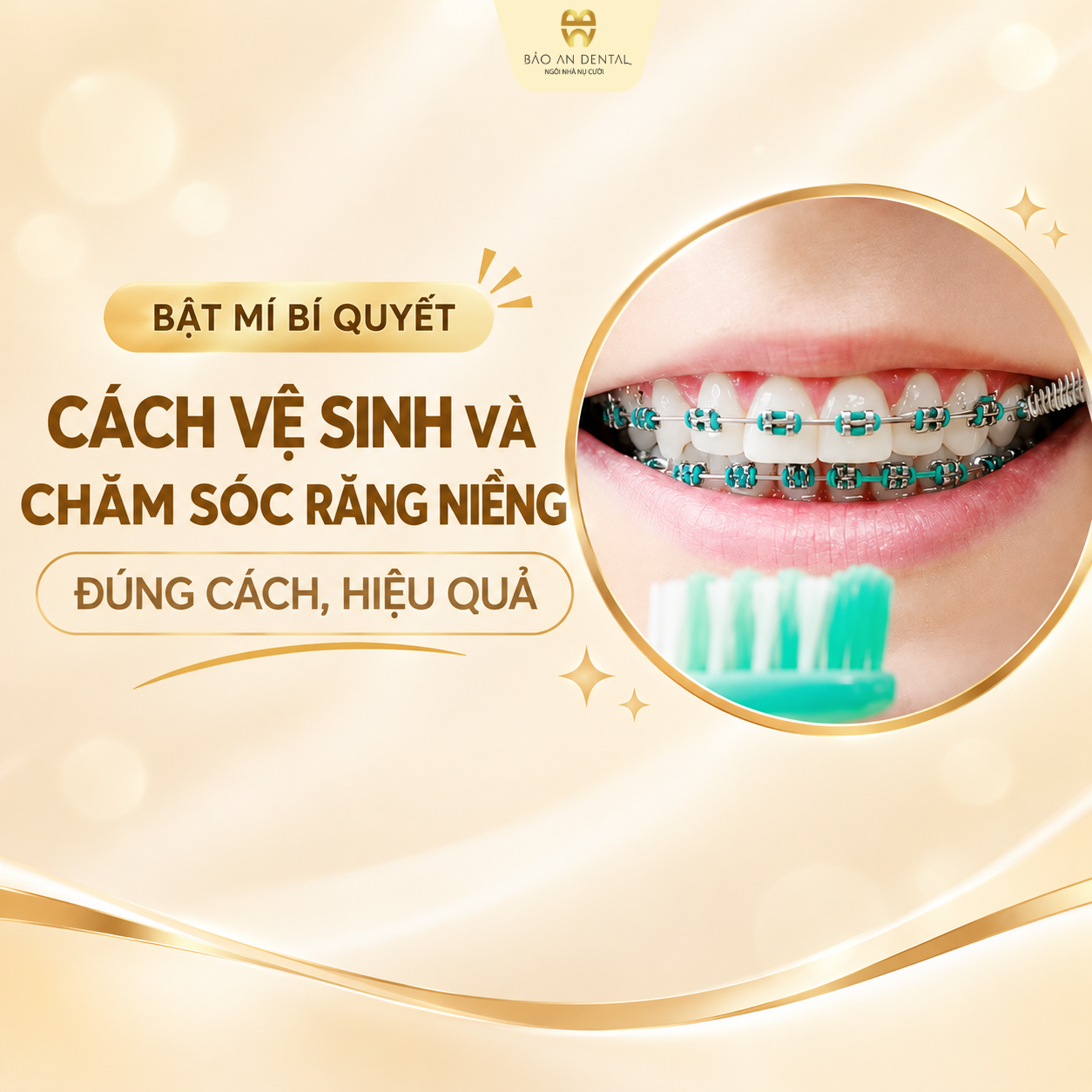
Properly cleaning and caring for braces is an important factor in maintaining oral health and supporting successful orthodontic treatment. When wearing braces, brackets and archwires create many areas where food can easily become trapped, making teeth more difficult to clean. If they are not cleaned thoroughly, plaque buildup can increase the risk of tooth decay, gingivitis, and other dental problems.
To care for braces effectively, you should combine a soft-bristled toothbrush, an interdental brush, dental floss, and a water flosser. In addition, you should maintain a suitable diet and attend regular follow-up appointments according to the schedule provided by your dentist at Bao An Dental.
1. Why is proper oral care necessary when wearing braces?
During orthodontic treatment, brackets, archwires, and orthodontic appliances create more areas that are difficult to clean than ordinary teeth. Food can easily become trapped around brackets, between teeth, and along the gumline. If it is not cleaned regularly, plaque will accumulate and create conditions for bacteria to grow.
Improper oral hygiene can lead to several problems, such as:
Tooth decay: Plaque and bacteria accumulating around brackets can increase the risk of tooth decay.
Gingivitis: The gums may become swollen, red, and bleed when plaque is not removed.
Bad breath: Food debris trapped for a long time can cause an unpleasant odor in the mouth.
White spots on tooth enamel: Prolonged plaque buildup can cause demineralization of the tooth enamel, leaving white spots after the brackets are removed.
Therefore, properly caring for braces not only helps maintain oral health but also contributes to preserving the appearance of the teeth after orthodontic treatment is completed.
2. How to properly clean and care for braces
To clean your teeth effectively throughout orthodontic treatment, you should combine several specialized cleaning tools instead of using only a regular toothbrush.
2.1. Use a soft-bristled toothbrush and fluoride toothpaste
You should choose a toothbrush with soft bristles and a small head so it can easily reach areas around the brackets and archwires. A soft-bristled toothbrush helps remove plaque without damaging the gums when used properly.
In addition, you should use toothpaste containing fluoride at an appropriate concentration to help strengthen tooth enamel and prevent tooth decay during orthodontic treatment.
2.2. Brush your teeth using the proper technique
When wearing braces, you should brush your teeth at least 2–3 times a day, especially after meals and before going to bed. Each brushing session should last about 2 minutes, with attention paid to thoroughly cleaning all areas around the brackets.
Basic toothbrushing steps:
Step 1: Hold the toothbrush at approximately a 45-degree angle toward the gumline and brush gently.
Step 2: Clean the area above the brackets using short, gentle strokes.
Step 3: Continue brushing below the brackets to remove food and plaque.
Step 4: Thoroughly brush the inner, outer, and chewing surfaces of all teeth.
Step 5: Clean your tongue to limit odor-causing bacteria in the mouth.
Do not brush too hard or use a hard-bristled toothbrush, as this may damage the gums and affect oral health.
2.3. Use an interdental brush to clean the brackets
An interdental brush is a useful tool for people wearing braces, helping clean areas that are difficult for a regular toothbrush to reach.
You can use an interdental brush to clean between brackets, under the archwire, and in spaces between the teeth. When using it, gently guide the brush through the areas that need cleaning, avoiding excessive force that could damage the gums or affect the orthodontic appliance.
2.4. Combine dental floss with a water flosser
Dental floss helps remove food debris and plaque from between the teeth, where a toothbrush cannot easily reach. People wearing braces can use specialized dental floss or a floss threader to make it easier to guide the floss under the archwire.
In addition, a water flosser is also an effective aid for cleaning braces. A suitably pressurized stream of water helps remove food remaining around the brackets, archwires, and gumline.
You should combine these tools with daily toothbrushing to improve cleaning effectiveness, rather than using a water flosser as a complete replacement for dental floss.
2.5. Use an appropriate mouthwash
Mouthwash can help remove bacteria, clean the mouth, and maintain fresh breath. People wearing braces may choose a fluoride-containing product as recommended by their dentist to help protect tooth enamel.
Use it according to the instructions on the product, and avoid overusing mouthwashes with strong antiseptic properties without professional guidance.
2.6. Attend regular follow-up appointments and follow the orthodontic schedule
Attending follow-up appointments as scheduled helps the dentist monitor tooth movement, check the condition of the brackets and archwires, and assess oral health.
At each follow-up appointment, the dentist may adjust the applied force, check for emerging issues, and provide care instructions appropriate for each stage of orthodontic treatment.
If a bracket comes loose, the archwire pokes your cheek, or unusual pain occurs, you should contact the dental clinic for assistance and not adjust the orthodontic appliance yourself at home.
2.7. Wearing a retainer correctly after having braces removed
After completing the orthodontic treatment, you need to continue wearing the retainer according to your dentist’s instructions. This is an important step to stabilize the new position of your teeth and limit the possibility of them shifting back.
In addition to following the recommended wearing schedule, you should also clean the retainer regularly, store it properly, and attend follow-up appointments as scheduled.
3. Dietary considerations when wearing braces
Besides oral hygiene, your diet also affects dental health and the stability of the orthodontic appliance.
To limit bracket breakage, archwire bending, and discomfort while eating, you should keep the following in mind:
Limit hard foods: Avoid chewing ice, hard candy, very hard nuts, or foods that require strong biting force.
Avoid chewy, sticky foods: Caramel, chewing gum, and foods that easily stick can get caught on the brackets.
Cut food into small pieces: Divide food into small pieces to make it easier to chew and reduce pressure on the teeth.
Limit sugary foods: Confectionery and sugary soft drinks can increase the risk of tooth decay if oral hygiene is inadequate.
Prioritize soft foods: Foods such as porridge, soup, eggs, fish, and soft-cooked vegetables are easier to eat, especially after adjustments to the braces.
Drink enough water: This helps maintain moisture in the mouth and aids in clearing away leftover food.
Maintaining a scientific diet combined with proper oral hygiene will help you go through the orthodontic treatment process more comfortably.
4. Frequently asked questions about caring for teeth with braces
4.1. How many times a day should you brush your teeth when wearing braces?
People wearing braces should brush their teeth at least 2–3 times a day, especially after meals and before going to bed. In addition, they should use an interdental brush, dental floss, or a water flosser to clean areas around the brackets and between the teeth.
4.2. Should you use a water flosser when wearing braces?
Yes. A water flosser is an oral hygiene aid for people with braces, helping remove food debris around the brackets, archwire, and gumline. You should choose an appropriate pressure level and use it according to the instructions to avoid causing gum discomfort.
4.3. Can you use dental floss when wearing braces?
People wearing braces can absolutely use dental floss. However, because the brackets and archwire create obstacles, you should choose specialized orthodontic floss or a floss threader to clean between the teeth more easily.
4.4. Is an interdental brush necessary when wearing braces?
Yes. An interdental brush helps clean areas around the brackets, beneath the archwire, and areas that are difficult for a regular toothbrush to reach. It is a tool that should be included in the daily oral care kit of people wearing braces.
4.5. Do you need to continue special dental care after having braces removed?
After the brackets are removed, you still need to maintain proper oral hygiene habits and wear the retainer according to your dentist’s instructions. Regular follow-up visits are also essential for monitoring the stability of the orthodontic results.
Proper care for teeth with braces with Bảo An Dental
A straight, beautiful smile after orthodontic treatment depends not only on the orthodontic method but also on the cooperation between the dentist and each person’s oral care habits.
At Bảo An Dental, patients have their orthodontic treatment monitored by dentists, receive guidance on cleaning teeth with braces, and have their oral health checked at each stage.
If you are wearing braces or preparing to begin your orthodontic journey, contact Bảo An Dental for consultation and guidance on appropriate oral care.