
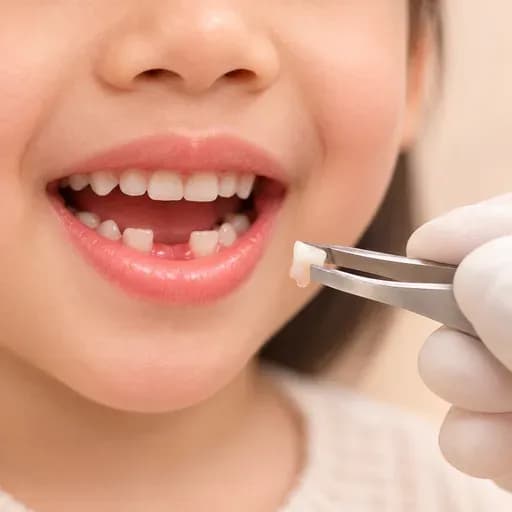
What Parents Need to Know to Help Children Replace Their Teeth at the Right Time
Baby teeth play an important role in chewing, speech, and maintaining space for permanent teeth to emerge. When it is time for tooth replacement, baby teeth usually become loose and fall out naturally as part of the child’s development. However, in some cases, baby teeth need to be examined by a dentist and extracted as indicated to limit impacts on the child’s oral health.
So, when should a child’s baby teeth be extracted, what does the procedure involve, and how should parents care for their child after an extraction? Explore the essential information below with Bảo An Dental.
When Does a Child Need Baby Tooth Extraction?
Children typically begin losing their baby teeth at around age 6. This process may vary depending on each child’s development. Not every loose baby tooth needs to be extracted, as many will fall out on their own when the permanent tooth develops at the appropriate time.
Parents should take their child to the dentist for an examination in the following cases:
A baby tooth has been loose for a long time but has not fallen out: The dentist will assess the degree of looseness and the child’s tooth-replacement status.
A permanent tooth has emerged, but the baby tooth remains: An examination is needed to determine whether the baby tooth should be extracted to facilitate tooth replacement.
A baby tooth has severe decay, damage, or infection: The dentist will assess its restorability before recommending extraction.
A baby tooth obstructs tooth eruption: Some cases require intervention based on professional indications.
The child needs orthodontic support: Extraction is performed only when there is a specific treatment plan from the dentist.
A timely dental examination helps parents clearly understand their child’s dental condition and choose the appropriate option, avoiding unnecessary tooth extraction.
Should You Extract a Baby Tooth at Home?
When they notice a loose baby tooth, many parents have the habit of extracting it at home. However, if the tooth is not ready to fall out or shows unusual signs, self-extraction may cause pain, bleeding, gum injury, and make the child afraid of visiting the dentist.
Parents should not use string, hard objects, or forcibly pull a tooth that is not loose enough. If the tooth is very loose, the child is not in pain, and there are no unusual signs, parents can let it fall out naturally while guiding the child to maintain good oral hygiene.
If the tooth causes pain or abnormal bleeding, a permanent tooth has emerged behind it, or parents are unsure whether it is time for tooth replacement, they should take the child to a dental clinic for an examination.
Safe Baby Tooth Extraction Procedure at Bảo An Dental
At Bảo An Dental, baby tooth extraction is performed based on each child’s oral condition and psychological comfort. The basic steps include:
Step 1: Examination and assessment of the tooth condition
The dentist checks the degree of looseness, gum condition, and permanent tooth eruption process. X-rays may be considered when additional information is needed to make an appropriate recommendation.
Step 2: Consultation on the treatment approach
Parents are informed about their child’s dental condition, the reason for extraction, and considerations before the procedure.
Step 3: Preparation and discomfort reduction
Depending on the tooth condition, the dentist selects an appropriate method. Local anesthetic may be used when necessary to help the child feel more comfortable during the procedure.
Step 4: Tooth extraction
The dentist uses appropriate dental instruments to remove the baby tooth while controlling bleeding and minimizing injury to surrounding tissues.
Step 5: Post-extraction care instructions
Parents are instructed on how to control bleeding, maintain oral hygiene, choose foods, and monitor signs that indicate the child should return for a follow-up visit.
Why Take Your Child to Bảo An Dental?
Baby tooth extraction not only needs to be performed at the right time but also requires attention to the child’s comfort and emotional well-being. Parents should choose a dental facility with infection-control procedures and a professional team suited to their child’s needs.
When taking their child to Bảo An Dental, parents can discuss the following matters with the dentist:
Examination and consultation for each individual case: Assessment of baby teeth and permanent tooth eruption before making a recommendation.
Focus on infection control: Instruments and treatment areas should be processed according to professional procedures.
Attention to the child’s emotional well-being: Steps are explained in easy-to-understand language to help reduce the child’s anxiety during the examination.
Post-extraction care guidance: Helps parents monitor the extraction site and maintain their child’s oral hygiene habits.
Guide to Caring for Children After Baby Tooth Extraction
After tooth extraction, parents should provide careful care to help the extraction area stabilize and allow the child to return to normal activities quickly.
Control bleeding properly: Have the child bite down on clean gauze as instructed by the dentist, usually for about 15–30 minutes. If bleeding remains heavy or does not lessen, contact the dental clinic.
Do not disturb the extraction site: Remind your child not to use their hands, tongue, or hard objects to poke the area where the tooth was just extracted.
Choose suitable foods: Prioritize soft, cool, or slightly warm foods during the initial period; avoid foods that are too hot, hard, or likely to injure the extraction site.
Maintain gentle oral hygiene: Continue brushing with a soft toothbrush, taking care around the area where the tooth was just extracted. Only allow your child to rinse their mouth when appropriate for their age and as instructed by the dentist.
Monitor your child's condition: Observe the level of pain, swelling, and bleeding; do not give children medication without professional guidance.
If your child's pain gradually worsens, swelling becomes severe, they develop a fever, or bleeding persists, parents should take them to a dental clinic for an examination.
When Should Parents Take Their Child to See a Dentist?
Parents should proactively take their child for a checkup if they notice unusually loose baby teeth, permanent teeth erupting while baby teeth have not fallen out, severely decayed teeth, or if the child frequently feels discomfort in the area where teeth are being replaced.
Regular dental visits also help monitor the tooth replacement process, detect issues with tooth eruption positions early, and provide appropriate treatment when necessary.
Conclusion
Extracting baby teeth for children should be done at the right time and based on each child's actual oral health condition. Parents should not extract a tooth on their own without determining how loose it is or why it has not fallen out.
Bảo An Dental accompanies parents on the journey of caring for their children's smiles, from examinations and advice on the timing of tooth replacement to guidance on proper oral care.
Parents can contact Bảo An Dental for consultation and to schedule an appointment to check their child's dental condition.
BẢO AN DENTAL – CARING FOR SMILES, SUPPORTING FAMILIES