
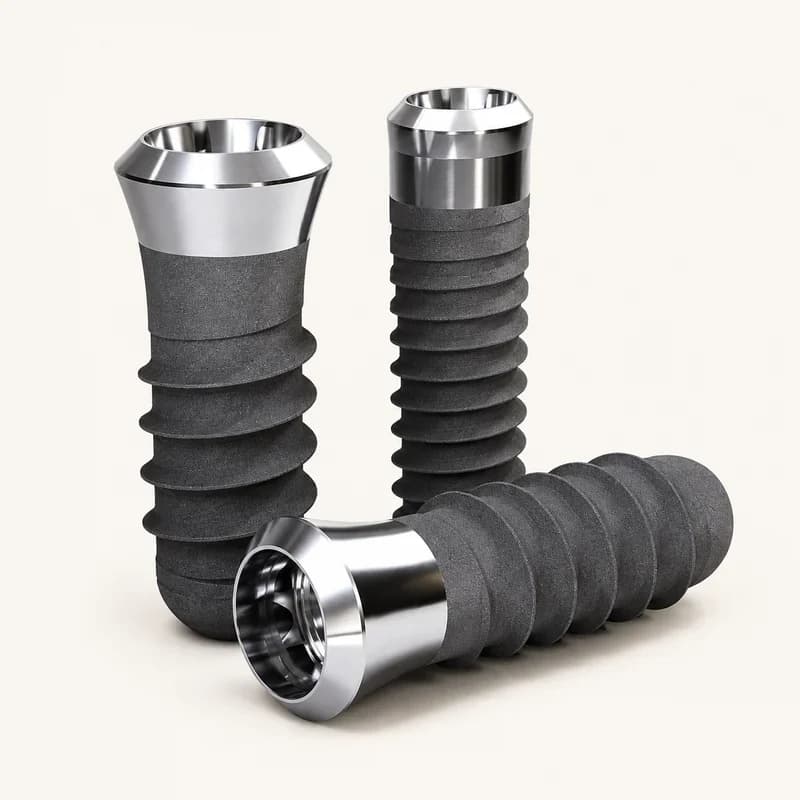
Swiss Implant Placement: A durable, aesthetic solution for missing tooth restoration
Missing teeth not only affect chewing ability and the appearance of the smile, but can also lead to jawbone loss, shifting of adjacent teeth, and changes in the bite. Swiss implant placement is one of the tooth restoration options that many clients are interested in because it can replace both the tooth root and crown, providing a feel similar to natural teeth.
At Bảo An Dental, each case is examined and given an individualized treatment plan based on the client's oral condition, jawbone quality, and restoration needs.
What is Swiss implant placement?
Implant placement is a technique in which an implant post is placed into the jawbone at the site of a missing tooth. Once the post has stably integrated with the bone, the dentist attaches an abutment and a ceramic crown to complete the new tooth.
An implant tooth typically consists of three parts:
Implant post: Placed in the jawbone, serving as an artificial tooth root.
Abutment: Connects the implant post to the crown above.
Ceramic crown: The visible part in the oral cavity, designed with a shape and color that match the remaining teeth.
Swiss implants is a general term for implant post lines researched, developed, or manufactured by brands originating from Switzerland. Each implant system has different designs, surface treatment technologies, and clinical indications. Therefore, selection should be based on professional assessment rather than solely on the country of origin.
Advantages of Swiss implants
Depending on the specific product and treatment condition, Swiss implants may offer the following notable benefits:
Restored chewing ability
The implant post is placed directly in the jawbone, providing high stability after osseointegration. The restored tooth helps clients chew more conveniently than with missing teeth or unstable removable dentures.
Aesthetics close to natural teeth
The ceramic crown is designed based on the location of the missing tooth, gum contour, facial shape, and current tooth color. This helps the implant tooth blend more harmoniously with the entire dental arch, especially when restoring teeth in the aesthetic zone.
Reduced impact on adjacent teeth
Unlike traditional dental bridges, single-tooth implant restorations generally do not require grinding down the two adjacent teeth to serve as supporting abutments. As a result, natural tooth structure is better preserved when adjacent teeth are healthy.
Support for maintaining jawbone
After tooth loss, the bone in the area no longer receives stimulation from the tooth root and may gradually resorb. The implant post replaces the tooth root and transfers chewing forces to the jawbone, thereby helping limit bone loss at the missing-tooth site.
Long-term usability
The lifespan of an implant depends on many factors, such as post quality, treatment technique, bone condition, overall health, oral hygiene habits, and follow-up schedule. When appropriately indicated and properly cared for, implants can remain stable for a long time.
Cases that may consider implant placement
This method may be considered by a dentist in the following cases:
Missing one tooth but wishing to minimize grinding of adjacent teeth.
Missing several consecutive teeth.
Missing teeth in multiple different locations on the dental arch.
Complete tooth loss and requiring fixed restoration or implant-supported restoration.
Loose removable dentures causing difficulty with chewing and communication.
Severely damaged teeth that can no longer be preserved and are indicated for extraction.
Not every client can receive implants immediately. The dentist needs to assess oral health, jawbone volume, gum condition, and systemic diseases before making an indication.
When is additional treatment needed before implant placement?
Some conditions may alter or prolong the treatment plan:
Insufficient jawbone
If the bone at the missing-tooth site does not have sufficient height or width to hold the implant post stably, the dentist may consider bone grafting. The extent of intervention depends on examination findings and diagnostic imaging.
Insufficient gum tissue
The soft tissue around an implant helps protect the restoration area and create an aesthetic gum contour. Some cases may require soft-tissue grafting before or during implant placement.
Gingivitis, periodontitis
Inflammation and infection need to be controlled before surgery. This helps create favorable conditions for healing and reduces the risk of complications around the implant.
Uncontrolled systemic diseases
Clients with cardiovascular disease, diabetes, blood-clotting disorders, or those taking long-term medication need to provide the dentist with complete information. Depending on the condition, the dentist may need to coordinate with a medical specialist before proceeding.
Swiss implant placement procedure at Bảo An Dental
The specific procedure is adjusted for each treatment case and usually includes the following stages:
1. Examination and diagnosis
The dentist examines the condition of the teeth, gums, bite, and oral health. The client is prescribed appropriate imaging to assess jawbone density, height, and width, while identifying anatomical structures that require attention.
2. Treatment planning
Based on the examination data, the dentist will advise on the implant placement position, Implant type, restoration plan, and any additional procedures if needed. Patients will also be informed about the treatment stages, care instructions, and potential risks.
3. Treatment of oral diseases
Issues such as tooth decay, gingivitis, periodontitis, or infections need to be controlled before Implant placement. If a tooth needs to be extracted, the dentist will assess whether immediate Implant placement is possible or whether healing time is needed.
4. Implant fixture placement
The dentist administers local anesthesia, prepares the fixture site in the jawbone, and places the Implant according to the treatment plan. After surgery, the treatment area is checked and home-care instructions are provided.
5. Monitoring osseointegration
The fixture needs time to bond stably with the jawbone. Healing time varies from person to person, depending on the implant site, bone quality, healing ability, and whether bone grafting is performed.
In some cases that meet the necessary conditions, the dentist may prescribe a temporary tooth for aesthetic support. The temporary tooth must be used as instructed to avoid placing excessive force on the healing fixture.
6. Attaching the ceramic crown to the Implant
Once the fixture is stable, the dentist takes an impression or records digital data to design the restoration. The ceramic crown is then attached to the Implant, and its fit, contact points, and bite are checked.
7. Regular follow-up visits
Patients need to attend follow-up visits as scheduled so the dentist can monitor the gum tissue, bone around the fixture, restoration condition, and biting forces. Regular check-ups also help detect abnormal signs early.
Does Implant placement hurt?
During Implant placement, the treatment area is anesthetized, so pain is generally controlled. After the anesthesia wears off, patients may experience soreness, swelling, or discomfort during the first few days. The degree of reaction depends on individual factors and the extent of the procedure.
Patients should take medication exactly as prescribed, apply cold compresses as instructed, and contact the dental clinic if symptoms such as progressively worsening pain, prolonged swelling, uncontrolled bleeding, fever, or signs of infection occur.
How to care for yourself after Implant placement
To support healing and maintain Implant stability, patients should:
Bite on gauze and care for the wound according to the dentist's instructions.
Do not touch the surgical area with your hands or disturb it with your tongue.
Prioritize soft, cool foods during the initial period.
Avoid chewing directly on the area where the Implant was just placed.
Do not smoke, as it may affect healing and osseointegration.
Limit alcoholic beverages as directed by the dentist.
Brush gently and clean the remaining areas of the mouth.
Take medication at the correct dosage; do not stop or add medication without authorization.
Attend follow-up visits as scheduled.
After the restoration is completed, thoroughly clean the area around the Implant using an appropriate toothbrush, dental floss, or supporting tools as instructed. Implants do not develop tooth decay, but the gum tissue and bone around the fixture remain at risk of inflammation if plaque is not controlled.
Factors affecting Implant treatment results
Treatment effectiveness depends not only on the selected implant system but also on:
Initial diagnosis and treatment planning.
The dentist's professional experience.
Jawbone quality and volume.
The health of the gum tissue.
Accuracy in fixture placement and restoration procedures.
Ability to control the bite.
The patient's overall health.
Smoking habits, teeth grinding, or oral hygiene practices.
Adherence to follow-up and Implant maintenance schedules.
Therefore, a quality Implant system must be accompanied by appropriate diagnostic, surgical, restorative, and post-treatment care procedures.
What does the cost of Swiss Implant treatment depend on?
Treatment costs may vary based on:
The number of teeth requiring restoration.
The Implant fixture line and connection type.
The material of the ceramic crown.
The condition of the bone and gum tissue.
The need for bone grafting, sinus lifting, or periodontal treatment.
The type of restoration: a single tooth, an Implant-supported bridge, or full-arch restoration.
The complexity of each case.
Patients should undergo an in-person examination to receive a diagnosis and a specific cost plan. Before treatment, they should clearly understand the products being used, the included items, and the follow-up schedule.
Why is an examination necessary before choosing an Implant?
No single Implant type is suitable for all cases. Some people need to prioritize a fixture design appropriate for areas with limited bone; others need a restorative solution focused on aesthetics, load-bearing capacity, or support for restoring multiple teeth.
Through an examination, dentists at Bảo An Dental will conduct a comprehensive assessment and provide advice based on clinical indications. Patients need to fully disclose their medical history, medications currently being used, allergy status, and previous dental procedures so that treatment can be planned more safely.
Register for a Swiss Implant consultation at Bảo An Dental
Swiss Implant treatment is a solution that can help restore missing teeth in both function and aesthetics. However, treatment results depend on selecting the appropriate indication, jawbone quality, treatment technique, and long-term care regimen.
If you are missing one tooth, multiple teeth, or an entire arch, you can register for an examination at Bảo An Dental. The dentist will examine your oral condition, assess your jawbone, and advise on an Implant option suited to your actual needs.
The above content is for reference only and does not replace a dentist’s direct diagnosis or treatment recommendation.