
Korean Dental Implants - Biotem
Tooth loss not only affects the aesthetics of a smile but also reduces chewing ability, causes teeth to shift, and may lead to jawbone loss over time. Among current restorative methods, dental implant placement is chosen by many people for its ability to replace both the missing tooth root and crown.
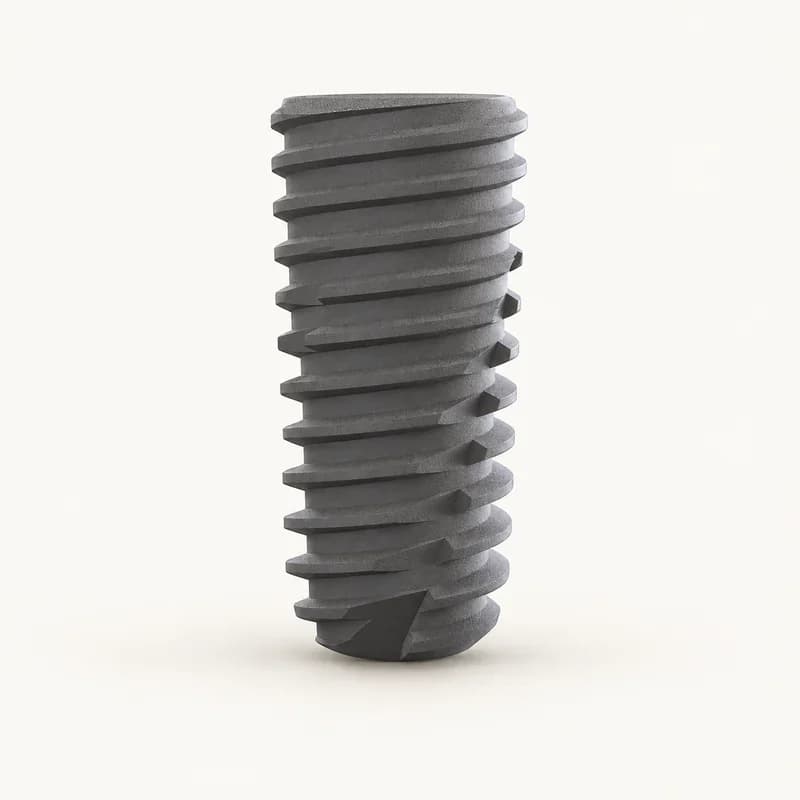
Biotem Implant is one of the implant fixture lines originating from South Korea. The product is used to restore a single missing tooth, multiple missing teeth, or an entire arch, depending on the oral condition and the dentist's indication.
What is a Biotem Implant?
A Biotem Implant is an artificial tooth root placed into the jawbone at the site of a missing tooth. Once the fixture has achieved stability and integrated with the bone, the dentist attaches an abutment and a ceramic crown to complete the restoration.
A typical implant tooth consists of three components:
Implant fixture: Placed in the jawbone, it serves a role similar to that of a natural tooth root.
Abutment: Connects the implant fixture to the crown above.
Ceramic crown: Recreates the shape and function of the tooth crown.
The time required to complete treatment varies from case to case. Bone density, the location of tooth loss, general health, gum tissue condition, and healing capacity can all affect the implant treatment plan.
Notable advantages of Biotem Implants
Restores chewing ability
The implant fixture is placed directly into the jawbone, enabling it to provide a stable foundation for the crown. Once the implant has integrated well and the restoration is properly designed, patients can chew more comfortably than with missing teeth or unstable removable dentures.
No need to grind adjacent teeth
For a single missing tooth, implant placement generally does not require grinding down the two neighboring teeth as supports, unlike traditional dental bridges. This helps preserve the structure of the remaining healthy teeth more effectively.
Helps limit bone loss at the missing-tooth site
After tooth loss, the jawbone area no longer receives physiological stimulation from the tooth root and tends to gradually resorb. An implant replaces the tooth root in the missing-tooth area, thereby helping maintain function at the restoration site. The degree of bone preservation also depends on many factors and requires regular monitoring by a dentist.
Improves smile aesthetics
The ceramic crown on an implant can be designed based on the color, shape, and proportions of the surrounding teeth. Aesthetic results depend on the tooth position, bone and gum condition, treatment technique, and the restorative material selected.
Applicable to various tooth-loss conditions
Depending on the examination results, Biotem Implants may be considered for cases of:
Loss of a single tooth;
Loss of multiple consecutive or non-consecutive teeth;
Long-term tooth loss;
Full-arch tooth loss requiring fixed or removable implant-supported restorations.
Not everyone with missing teeth can use the same treatment option. The number and positions of the implants must be calculated based on jawbone structure, bite, and actual restorative needs.
Who may receive Biotem Implants?
Dental implants are generally considered for people who have lost teeth, have suitable health conditions, and are eligible for minor surgery. Before treatment, the dentist needs to assess:
The number and locations of missing teeth;
The height, width, and density of the jawbone;
The condition of the gums and periodontal tissues;
The bite and restorative space;
History of systemic diseases;
Medications currently being used;
Smoking habits, oral hygiene, and teeth grinding.
If the jawbone does not have sufficient volume, the patient may need bone grafting, sinus lifting, or other supportive procedures before or at the same time as implant placement. Specific indications must be based on imaging and direct examination results.
Cases requiring caution
Some conditions may increase the risk of complications or affect healing ability, such as:
Uncontrolled systemic disease;
Active periodontitis or oral infection;
Poor oral hygiene;
Frequent smoking;
Use of certain medications that affect bone metabolism or blood clotting;
Pregnancy or a health condition requiring the procedure to be postponed;
Insufficient jawbone with no possibility of appropriate supportive treatment yet.
Patients should not determine on their own whether they are suitable candidates. The dentist needs to obtain a complete medical history, assess risks, and may coordinate with the specialist treating the underlying condition.
Biotem Implant procedure at Bao An Dental
The actual procedure is personalized for each individual and usually includes the following stages:
1. Examination and diagnostic imaging
The dentist examines the teeth, gums, bite, and missing-tooth area. Dental X-rays or CT scans may be indicated to assess bone structure, the location of nerves, the maxillary sinus, and related anatomical areas.
2. Treatment planning
Based on the examination data, the dentist determines the position, size, and direction of implant placement; while also advising on the type of restoration, the expected number of appointments, and any additional procedures if necessary.
At this stage, patients should provide complete information about underlying medical conditions, allergy history, and medications currently being used.
3. Treatment of related oral health issues
Gingivitis, periodontitis, tooth decay, or infection sites need to be controlled before Implant placement. Creating a stable oral environment helps reduce the risk of postoperative complications.
4. Implant fixture placement
The dentist administers local anesthesia and places the Biotem fixture in the planned position. In some cases, bone grafting or supportive procedures may be performed at the same time.
After fixture placement, the patient is instructed on medication use, hygiene, and follow-up visits. If conditions permit, the dentist may provide a temporary tooth to support aesthetics during the healing period.
5. Monitoring the osseointegration process
The Implant fixture needs time to stabilize in the jawbone. The dentist will assess the soft tissues, healing progress, and Implant stability at each follow-up milestone. Patients should not skip appointments on their own, even if they do not feel pain or discomfort.
6. Attaching the Abutment and crown
When the Implant meets the conditions for restoration, the dentist takes an impression or performs a digital scan to fabricate the crown. The ceramic crown is then attached to the fixture via the Abutment and the bite is adjusted.
7. Follow-up and maintenance
After completion, patients need regular follow-up visits to check the Implant, ceramic crown, bite, and tissues around the fixture. This is an important part of the treatment process, not merely an additional check-up step.
Is Biotem Implant placement painful?
During fixture placement, the treatment area is usually anesthetized, so pain is controlled. After the anesthetic wears off, patients may experience soreness, tightness, or mild swelling. The level of discomfort depends on the individual and the complexity of the treatment case.
The dentist will provide instructions on medication use and home care. Patients should not independently purchase additional painkillers, antibiotics, or anti-inflammatory medications without a prescription.
If increasing pain, prolonged bleeding, significant swelling, fever, unusual numbness, or discharge at the surgical site occurs, contact the dental clinic for prompt examination.
How long does the implant procedure take?
The time required to place one Implant fixture is usually shorter than the total treatment time. After surgery, the fixture needs to undergo a period of integration with the bone before the permanent tooth can be attached.
The timeline may vary depending on:
The quality and volume of the jawbone;
The number of fixtures to be placed;
The location of the missing tooth;
Whether bone grafting or sinus lifting is needed;
Health status and healing ability;
The chosen restoration option.
Therefore, an exact timeline can only be estimated after the dentist examines the patient and analyzes the imaging results.
How to care for an Implant after placement
During the first days after surgery, patients should:
Bite down on gauze for the instructed amount of time;
Apply a cold compress outside the treatment area if recommended by the dentist;
Take medications at the correct dosage and time;
Eat soft foods and avoid chewing directly on the recently operated area;
Avoid vigorous rinsing or disturbing the wound;
Avoid alcohol and tobacco;
Limit strenuous physical activity during the initial period;
Attend follow-up appointments as scheduled.
In the long term, patients need to brush properly and thoroughly clean around the Implant using suitable tools as instructed by the dentist. Implants do not develop cavities like natural teeth, but the tissues around an Implant can still become inflamed if plaque is not controlled.
How long can a Biotem Implant last?
The lifespan of an Implant cannot be defined by one fixed number for everyone. Long-term results depend on:
The quality of the bone and gum tissues;
The position, direction of placement, and stability of the fixture;
The crown design and bite balance;
Oral hygiene ability;
Smoking or teeth-grinding habits;
Control of underlying medical conditions;
The schedule of follow-up visits and professional care.
To maintain results, patients need to view the Implant as something that requires regular care, rather than a restoration that is “done once and needs no further checks.”
Criteria for choosing an Implant clinic
In addition to the type of fixture, treatment outcomes also depend significantly on the diagnostic process, the dentist's expertise, and postoperative follow-up capabilities. When choosing a dental clinic, patients should consider:
A dentist with Implant expertise and experience;
A clear examination, imaging, and treatment-planning process;
Sterile conditions during surgery;
Implant fixtures with transparent origin and identification information;
A restoration plan suitable for the bite;
Post-treatment follow-up and maintenance policies;
Comprehensive consultation on potential benefits, limitations, and risks.
Biotem Implant placement at Bảo An Dental
At Bảo An Dental, people with missing teeth receive examinations and consultations based on their actual condition. The dentist evaluates oral health, jawbone structure, and restorative needs before recommending Biotem Implants or another suitable solution.
Patients are informed about the treatment stages, estimated timeframe, restoration options, and post-implant care. For complex cases such as long-term tooth loss, insufficient bone, or underlying medical conditions, the plan needs careful consideration and may require additional examination steps.
Frequently asked questions
Are Korean Biotem Implants suitable for front teeth?
It can be used in the anterior tooth region if the bone, gum, and prosthetic space conditions are suitable. As this area has high aesthetic requirements, the dentist needs to carefully assess the smile line, gum tissue, and implant placement position.
Can older adults receive dental implants?
Age is not the only determining factor. Overall health, bone quality, healing capacity, and willingness to cooperate with care are the factors that need to be assessed directly.
Can dental implants be placed after long-term tooth loss?
In many cases, dental implants can still be placed, but areas of long-term tooth loss are at risk of bone resorption. The dentist needs to examine imaging to determine whether bone grafting or supportive techniques are necessary.
Do I need to take time off work for dental implant placement?
The amount of time off depends on the number of implants, the extent of the procedure, and the nature of the work. For simple procedures, many people can return to normal activities soon, but they should still avoid strenuous activity and follow post-operative instructions.
Schedule a Biotem Implant consultation
Biotem Implant is an option for replacing missing teeth that should be indicated based on jawbone condition, oral health, and each person's needs. An in-person examination and diagnostic imaging are necessary steps to develop a safe and appropriate treatment plan.
Contact Bảo An Dental to schedule an examination of your missing-tooth condition and receive specific advice from a dentist regarding the Korean Biotem dental implant option. The above content is for reference only and does not replace professional diagnosis or treatment indications.