
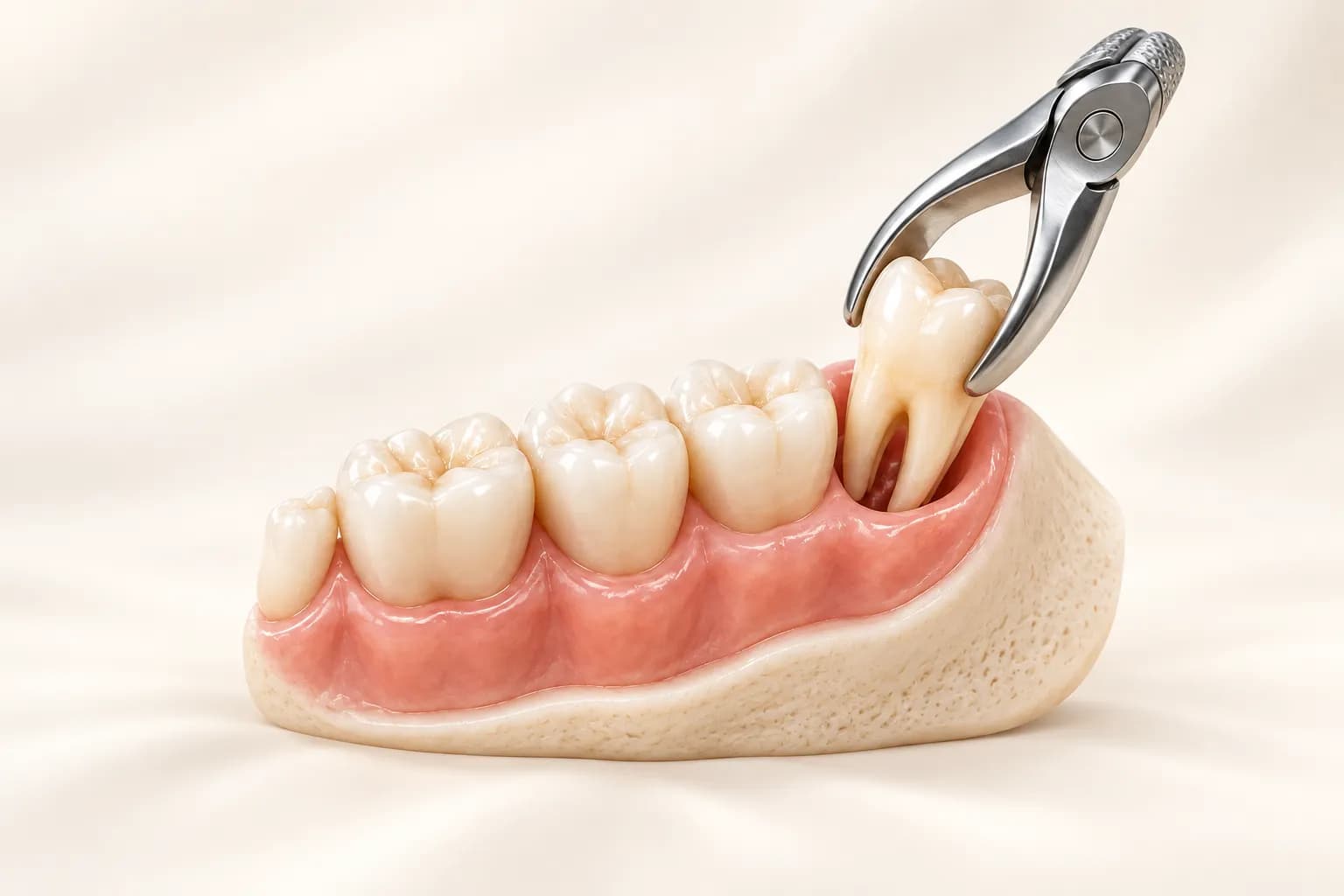
Traditional wisdom tooth extraction
Wisdom teeth usually emerge at the very back of the dental arch during adulthood. Because there may not be enough space behind the jaw, wisdom teeth can easily grow at an angle, become impacted, or erupt only partially, causing pain, gum inflammation, and difficulty with cleaning. In appropriate cases, the dentist may recommend traditional wisdom tooth extraction to remove the tooth and limit related complications.
What is traditional wisdom tooth extraction?
Traditional wisdom tooth extraction is a method that uses specialized dental instruments, such as forceps and elevators, to loosen the tooth and then remove it from the socket. Before the procedure, the treatment area is numbed to control pain during extraction.
Depending on the position, direction of eruption, and root shape, the dentist may extract the tooth directly or may need to open the gum, remove part of the bone, and section the tooth crown. Therefore, the technique varies from person to person and should be determined after examination and imaging.
When should a wisdom tooth be extracted?
Not all wisdom teeth need to be removed. If a tooth erupts straight, causes no symptoms, does not affect adjacent teeth, and can be cleaned properly, the dentist may recommend periodic monitoring.
Wisdom tooth extraction is usually considered when one or more of the following conditions occur:
The tooth grows at an angle, horizontally, or is impacted in the jawbone.
Recurring pain or gum swelling in the wisdom tooth area.
Inflammation of the gum flap around a partially erupted wisdom tooth.
Tooth decay in the wisdom tooth or on the distal surface of the second molar.
Food frequently becomes trapped, causing bad breath and difficulty cleaning.
The wisdom tooth puts pressure on or damages the adjacent tooth.
A cyst or lesion around the crown or roots is detected on imaging.
The wisdom tooth interferes with an orthodontic plan or another dental treatment.
The final indication should be based on clinical examination and X-ray findings; it should not be decided solely based on the sensation of pain.
Traditional wisdom tooth extraction procedure
1. Examination and health assessment
The dentist checks the condition of the teeth and gums, the degree of mouth opening, and signs of infection. The patient should provide complete information about underlying medical conditions, medications being used, allergy history, pregnancy status, or any previous episodes of abnormal bleeding.
2. X-ray imaging
X-ray images help the dentist assess:
The direction of wisdom tooth eruption.
The number and shape of the roots.
The extent to which the tooth is embedded in bone.
Its relationship with the second molar, maxillary sinus, or mandibular nerve canal.
Potential lesions around the tooth.
In some complex cases, the dentist may order additional diagnostic imaging to develop an appropriate treatment plan.
3. Cleaning and anesthesia
The treatment area is cleaned, disinfected, and locally anesthetized. The patient can usually still feel pressure, vibration, or tightness, but should not experience significant pain. If pain occurs during the procedure, inform the dentist immediately so they can check and administer additional anesthetic if needed.
4. Removing the tooth from the socket
For teeth that have erupted relatively favorably, the dentist uses instruments to loosen and remove the entire tooth.
If the tooth is angled, deeply positioned, or covered, the procedure may include:
Opening part of the gum tissue.
Creating access through the bone if necessary.
Dividing the tooth into smaller sections for safer removal.
Cleaning the socket and checking the surrounding tissues.
5. Bleeding control and wound suturing
After the tooth is removed, the socket is examined, cleaned, and bleeding is controlled. The dentist may suture the gum depending on the extent of the procedure. The patient will be instructed to bite on gauze and care for the area at home.
Advantages of the traditional method
Traditional wisdom tooth extraction has several notable characteristics:
It is a common technique that can be applied to many cases where teeth have erupted or are not excessively complex in their misalignment.
The dentist can directly control the procedure using standard dental instruments.
Not every case requires specialized supporting equipment.
Treatment effectiveness depends on appropriate indication, the dentist's skills, and the specific condition of the tooth.
Limitations to note
Compared with techniques that use supporting equipment, the traditional method may apply more mechanical force to the tooth and surrounding tissues. For impacted teeth, curved roots, or teeth located near important anatomical structures, the procedure may be more complex.
After extraction, the patient may experience:
Pain or a feeling of tightness after the anesthetic wears off.
Swelling of the cheek and gums.
Temporary difficulty opening the mouth or chewing.
Slight bleeding during the initial period.
Fatigue or discomfort for several days.
The degree of recovery varies depending on individual factors, the difficulty of the extraction, and adherence to care instructions.
Does wisdom tooth extraction hurt?
During extraction, anesthetic helps limit pain. The patient may still feel the dentist applying force or moving the tooth. After the anesthetic wears off, pain and swelling may occur.
The dentist will provide guidance on medication appropriate for the patient's health condition. Do not increase the dose, change medications, or reuse an old prescription without authorization. If pain progressively worsens, lasts unusually long, or does not respond to the prescribed medication, contact the dental clinic for evaluation.
Care after wisdom tooth extraction
Proper care helps protect the blood clot in the socket and supports the healing process.
During the first day
Bite down on the gauze for the duration instructed by the dentist.
Swallow normally; do not spit forcefully.
Do not rinse vigorously or use your tongue or hands to touch the tooth socket.
Avoid smoking, drinking alcohol, and using straws.
Avoid strenuous physical activity.
Apply a cold compress to the outside of the cheek if instructed by the dentist.
Eat soft, cool, or lukewarm foods; avoid foods that are too hot, hard, or spicy.
During the following days
Maintain gentle oral hygiene, avoiding direct contact with the wound.
Rinse your mouth as instructed by the dentist; do not use strongly irritating solutions on your own.
Take medications exactly as prescribed and at the correct times.
Limit chewing on the side where the tooth was extracted.
Attend follow-up appointments or have sutures removed as scheduled, if applicable.
Do not place medications, powders, leaves, or other substances into the tooth socket without instruction, as they may cause irritation, infection, or interfere with healing.
Signs that require contacting a dentist
Some mild symptoms, such as swelling, pain, or slight bleeding at first, may occur. However, patients should contact their dentist promptly if they experience any of the following signs:
Heavy bleeding or bleeding that does not decrease despite biting on gauze as instructed.
Pain that noticeably worsens after having improved for a period of time.
Increasing swelling, fever, or unusual discharge.
Bad breath accompanied by a persistent unpleasant taste at the tooth socket.
Difficulty swallowing, difficulty breathing, or severely limited mouth opening.
Numbness of the lips, chin, or tongue that persists or worsens.
Rash, difficulty breathing, or signs suggestive of a medication allergy.
If there is difficulty breathing, rapidly spreading swelling, or a severe allergic reaction, seek emergency medical assistance.
Who needs to be especially cautious?
Before a tooth extraction, inform the dentist if you have any of the following conditions:
A bleeding disorder or a history of prolonged bleeding.
Cardiovascular disease, high blood pressure, or diabetes.
Liver or kidney disease, or a weakened immune system.
Pregnancy or suspected pregnancy.
Use of anticoagulants, antiplatelet medications, osteoporosis medications, or other long-term treatments.
Allergy to local anesthetics, antibiotics, or pain relievers.
An active infection, fever, or unstable general health.
Do not stop any current medications on your own. The dentist may need to coordinate with the doctor treating your underlying condition before proceeding.
Is traditional wisdom tooth extraction suitable for every case?
No. The appropriate method depends on the difficulty of the tooth, root structure, jawbone condition, degree of inflammation or infection, and relationship to adjacent structures. Some simple cases can be managed with routine extraction techniques; more complex cases may require surgery or supporting equipment.
The choice of method should not be based solely on the desire for a quick extraction or on cost. The important goal is to remove the tooth for the proper indication, control tissue trauma, and minimize risks.
Conclusion
Traditional wisdom tooth extraction is a common technique and can be effective when properly indicated and performed by a qualified dentist. Before treatment, patients need an examination, imaging, and an assessment of their general health. After extraction, following care instructions and attending follow-up appointments as scheduled are important factors in helping the wound heal smoothly.
If a wisdom tooth is causing pain, swelling, gum inflammation, or difficulty with oral hygiene, visit a dental clinic for an examination rather than self-medicating for an extended period. The dentist will assess the specific condition and advise on the appropriate option.